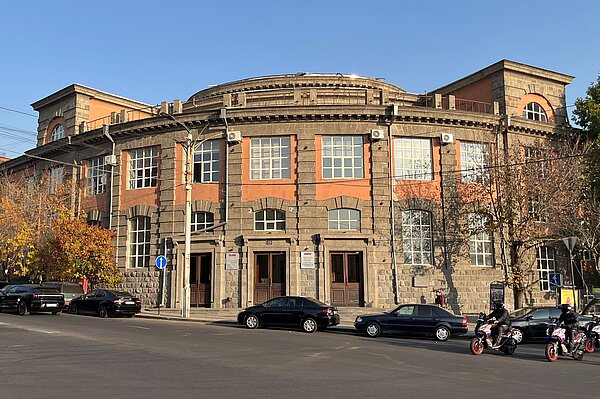
GESEc: Germany, the EU, and the Southern Caucasus – Economic perspectives
About the project
The GESEc project’s objective is to strengthen the partnership for teaching and research in the field of economics, business administration, and business law between HTWK Leipzig and two leading business universities in the Southern Caucasus, Armenian State University of Economics (ASUE) in Armenia and Caucasus University (CU) in Georgia.
Building on a previous project funded by DAAD, a rotating summer school on the topic of "Macroeconomics, Regional Development, Trade, and Intercultural Business: Germany, the EU, and the Southern Caucasus" is at the core of the GESEc project. For three years, the rotating summer school is planned to be held in cooperation with the project partners at their respective campuses. This practical measure will include student and lecturer exchanges to promote cooperation, strengthen partnerships, and advance all three project partners’ internationalization. The summer school is complemented by an “online teaching pool”. To this end, the three partner institutions plan to establish a network of faculty members who will provide online guest lectures on specific topics to the other partner universities. The third part of the GESEc project involves initiating joint research projects between the project partners and potentially new partners in the Southern Caucasus. Thereby, initiating trips of researchers from HTWK Leipzig are planned whereby the focus will be on the economics of regional development and on business law and compliance. This research-focused part of the GESEc project is complemented by research stays of PhD students respectively lecturers from ASUE and CU at HTWK Leipzig.
The project (funded by the DAAD Eastern Partnerships Program) starts on 01/01/2027 and ends on 12/31/2029. The funding volume is 58,235€.
Summer schools
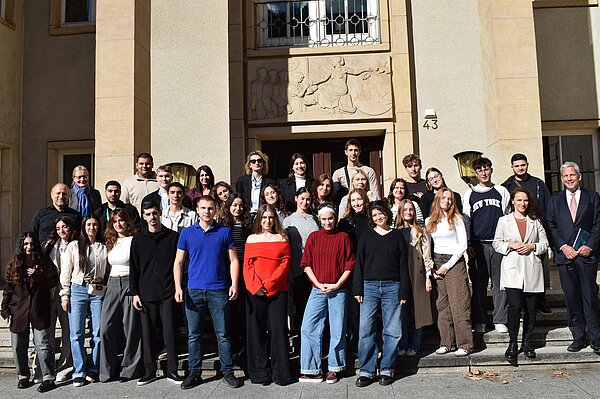
The summer schools are planned for one week in September in 2027 in Yerevan, in 2028 in Tbilisi, and in 2029 in Leipzig. The general topic is “Macroeconomics, Regional Development, Trade, and Intercultural Business: Germany, the EU, and the Southern Caucasus”. Students and staff from all three project partners will take part. The program is work in progress, but it will be similar to the 2025 summer school in Leipzig.
Lecturers at the summer school
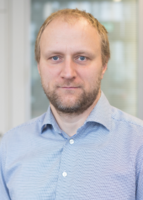
Bodo Sturm has been a professor of economics and quantitative methods at Leipzig University of Applied Sciences (HTWK Leipzig) and a research associate at the ZEW – Leibniz Centre for European Economic Research in Mannheim since 2009. He studied economics at Humboldt University of Berlin and the University of Tübingen. From 1999 to 2005, he was a research associate at the Chair of Economic Policy at the Faculty of Economics at Otto von Guericke University Magdeburg, where he received his doctorate in 2005. From 2005 to 2009, he was a research associate at ZEW Mannheim in the Research Department "Environmental and Resource Economics, Environmental Management." In his research, he looks at how environmental regulations are designed and the incentive problems in international environmental policy. He also works in experimental economics.
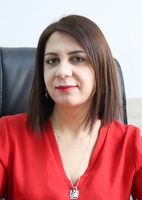
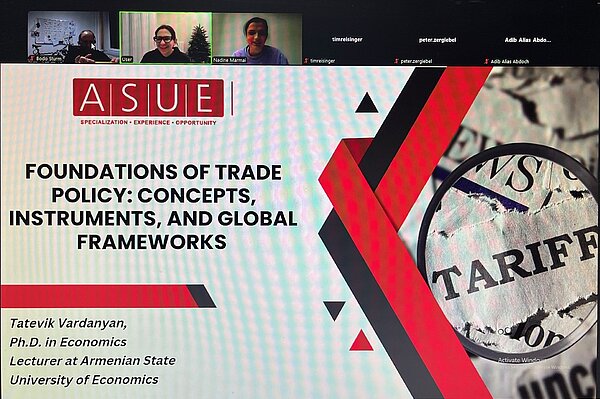
Tatevik Vardanyan is a lecturer at the Armenian State University of Economics (ASUE), where she teaches courses in international economics, transport economics, and logistics. She holds a PhD in Economics and has extensive experience in research, teaching, and project coordination. Her academic and policy work focuses on labor market analysis, digital transformation, economic integration, and logistics performance in Armenia and the broader Eurasian region. Dr. Vardanyan is also the Head of the Career Center at ASUE and has been involved in numerous international collaborations, including projects funded by the European Union, UN Women, and UNESCO. She actively participates in conferences and summer schools across Europe, and her current research explores mechanisms to enhance international trade competitiveness and supply chain resilience in emerging economies.
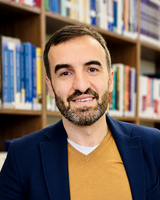
Vakhtang Partsvaniya is Professor of Management at Caucasus University (CU) in Tbilisi and Senior Research Fellow at the CSB Research Center. He specializes in sanctions, economic policy, and global automotive and energy markets, with a particular focus on Russia, the South Caucasus, and Europe. His work combines over fifteen years of academic research and teaching with more than a decade of international corporate experience in the automotive industry. He holds an MSc and PhD in Economics from the State University of Management in Moscow, and his analysis has appeared in The Moscow Times, The Insider, Riddle Russia, Forbes, and The Financial Times.
Teaching pool
We plan to run online guest lectures during the project and briefly describe the content here:
Research cooperation
We briefly describe the research cooperation between the project's partners here:
- Partsvaniya, V. (2026): presentations at HTWK Leipzig on “Trade Flow Diversion, Sanctions Evasion, and the Emerging Eurasian Transit Corridors: The Case of Georgia” and "Sanctions as Industrial Shock: Effects on the Russian Auto Industry" (April 2026).
- Partsvaniya, V. and Sturm, B. (2026): Europas Automobilhersteller werden Teil der Verteidigungsindustrie, Wirtschaftsdienst, 106. Jahrgang · September 2026 · Heft 9.